
Yesterday, we covered 80 kilometres. I was so proud. My previous record must have been around 56 kilometres, and this time I had managed 80 without any particular pain or even serious fatigue. I felt good. I felt strong.
So we had planned a quieter day for today: only 40 kilometres. In theory, that’s a normal day, but after doing 80, it almost seemed easy. We had found an inexpensive campsite that was probably less touristy and therefore likely to be quieter. We planned to stay there for two nights so we could take a rest day.
At 6 a.m., we got up. We ate something, brushed our teeth, and then packed everything away. By 7 a.m., we were on the road.
We headed towards Blois, following the Loire à Vélo cycle route. The journey was really pleasant. We even spotted a deer in the distance, seemingly just as surprised to see us as we were to find it there. And yet, the field was its natural environment, while the road was ours.
As we approached Blois, we realised that we were entering the city just as everyone was heading to work. Cars were driving fast and the traffic was frightening. A young man, who looked like he hadn’t had his driving licence for very long, even insulted me because I was slowing down the traffic.
And yet, I had every right to be there.
That seemed to bother him quite a lot.
Looking at the map, we found a path running parallel to the road. We decided to take it to get away from the traffic and be safer. The path was pleasant and everything was going well.
Then we reached the end of it.
To get out and reach the entrance to Blois, we had to climb a slope that looked fairly steep. Alizée was still with me, so I thought we could manage it.
We tried. And then I heard an enormous crash underneath the bike.
I felt the pedals moving strangely. I stopped immediately at the side of the path before lying down underneath the bike to understand what had just happened.
At first, I wasn’t particularly worried. I was almost happy to realise that just four or five months earlier, I probably wouldn’t even have been able to lie down underneath my bike like that.
Then I looked.
And I realised it was serious.
The sprocket at the hub output was completely bent. Before I left, my father had already noticed that it seemed fragile. So I had contacted the manufacturer, who assured us that it was made of steel and strong enough.
Clearly, it wasn’t.
I started to panic. I called my father, who asked whether I could try to straighten the sprocket, at least enough to reach the next campsite and then think about a proper repair.
Looking more closely, I realised that would be impossible.
So I started taking the hub apart. I didn’t have all the perfectly suitable tools, but that was a choice we had made before leaving: carrying more tools also means carrying more weight.
Taking it apart took a very long time. After almost two hours, I finally managed to remove the hub and see the full extent of the damage.
It was even worse than I had imagined.
The sprocket was completely deformed. It was normally held in place by four screws, but the heads of two of them had been completely sheared off. The broken pieces were still stuck inside the hub.
That was when my morale really started to collapse. Little by little, I sank deeper into despair. I started imagining the worst: the end of the journey.
But because giving up on this expedition remains unthinkable to me, my brain started searching for completely unrealistic solutions. Continue on foot. Buy a regular mountain bike. Carry on some other way.
But how would I transport all my equipment? How would I get through the winter? And what would happen to the project we had built around this bike?
I also thought about all the partners who had helped build it. About all the people following me. There are now nearly 180,000 of us across social media. I know this adventure has given hope to a lot of people.
That thought keeps me going, but it also puts an enormous amount of pressure on my shoulders. I’m afraid of disappointing people. Sometimes, I feel as though I no longer have the right to fail.
And at that exact moment, I couldn’t see any solution.
Fortunately, Alizée is still with me. During this first part of the journey, she is a bit like my cheat code. Having her with me allows me to overcome situations that would be extremely difficult to deal with alone.
She took the sprocket to a car repair garage and asked them to try to straighten it. The goal was still the same: to make a temporary repair that would simply allow us to reach a campsite.
When she came back, the sprocket was a little straighter, but nowhere near enough. It was impossible to reinstall it.
We had been stuck on that path since 9 a.m.
It was now 3 p.m.
We called every bike repair shop in the area, hoping that one of them might have a compatible sprocket. None of them had one in stock. It’s an uncommon part. Two shops could order one, but one told us it would take a week and the other three weeks.
Eventually, we called a recovery truck to transport the bike to the nearest campsite. At least there, we would be safe, have electricity and have somewhere to think about what to do next.
Christophe, the owner of Gueniot recovery services in Blois, is one of those people who might seem a little gruff at first but has a huge heart. When he heard my story, he decided not to charge me for the recovery.
Thank you, Christophe.
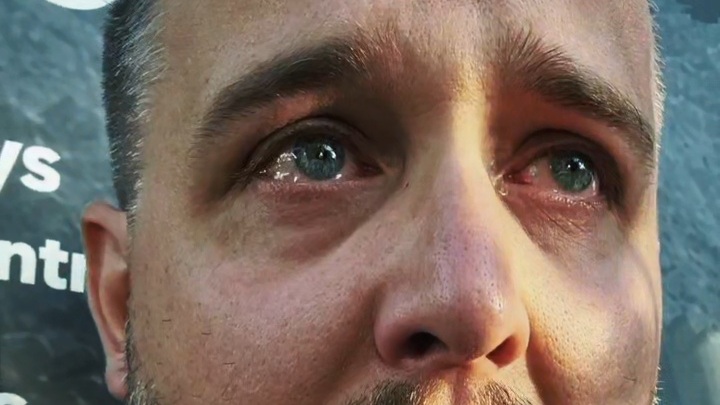
Once we were settled at the campsite, I was devastated. That was when I spoke to my followers and told them what had happened.
I couldn’t do it without crying.
I was afraid of how it might look. Afraid that some people would say I was “whining,” to put it bluntly. Afraid people would think I was putting my sadness on display when, in reality, I was simply trying to hold myself together.
With so many people following this adventure every day, I couldn’t pretend that nothing had happened. And in the end, posting that story barely half an hour after we arrived actually made me feel better.
It was as though a weight had been lifted from my shoulders.
I then spent hours on the phone with the people close to me, trying to find a solution. I went to bed worried, sad and not knowing whether my bike would ever be able to get back on the road.
Today is the eighth day of the expedition. It was supposed to be our rest day.
Instead, I spent almost the entire day on the phone.
A lot of people tried to help me. I’m thinking of Nicolas, my manager at MACIF, Mathieu, my former colleague, and also Grégory, who contacted me and drove for an hour to try to find me a sprocket. Unfortunately, the one he found was too fragile to work.
I’m also thinking of Marion, who moved heaven and earth trying to find people around her who might have the skills to help.
But above all, I’m thinking of Alizée.
Without her, these past two days would have been infinitely more difficult. She has given me an enormous amount of support and taken a huge part of the mental load off my shoulders at a time when I’m so sad that I’m struggling to pick myself back up.
Eventually, we decided to order several sprockets identical to the one I had been using online, but supposedly made from slightly stronger steel. That should at least allow me to get back on the road using the same system as before.
Most importantly, with express delivery, I should have the parts within 24 hours.
There were still the two broken pieces of screw stuck inside the hub, as well as a leak we had just discovered.
Alizée took the hub to Culture Vélo, a few kilometres from the campsite. After several hours, they managed to extract the two broken screws and gave us new ones. We also bought a few additional tools to make reassembly easier.
The hub has probably been weakened, but it should still be able to work.
The new sprockets are due to arrive tomorrow at a collection point near the campsite.
It’s a solution.
But only a temporary one.
Since this morning, I’ve been trying to find something genuinely stronger. Because if this breakdown happens again in a country where I don’t speak the language, far from everything and with nobody nearby to help me, the situation will be completely different.
We are now considering having a custom-made part manufactured, something much stronger. Unfortunately, it’s August and many workshops are closed.
So for now, I still don’t have a permanent solution.
It is August 7th, and it is 11:08 p.m. I am sad, exhausted and I feel empty.
I’m writing these few words without knowing exactly what will happen next.
In theory, the new sprockets will arrive tomorrow. I hope I’ll be able to put everything back together. I hope the bike will be able to get back on the road.
But even if it works, how long will the repair last?
I’m also having more and more doubts about going through Paris. The traffic, the safety, how vulnerable I am with such a large bike… Is it really a good idea?
Am I simply obsessed with the idea of getting a photo of my bike in front of the Eiffel Tower or the Arc de Triomphe?
Am I taking unnecessary risks just for a picture?
My project is to travel around Europe.
It isn’t to take a photo in Paris.
And yet, I want that photo so badly.
I had prepared myself for difficult moments, but not this early.
We have travelled around 270 kilometres over mostly flat terrain. Yes, the slope where the sprocket failed was around 12%, but the day before, we had covered 80 kilometres.
We felt strong.
And today, I’m stuck.
Stuck at a campsite.
I had imagined my journey on the roads of Europe.
I hope that tomorrow, the bike will be moving again.
And that all of this will soon be nothing more than a bad chapter in the story.